First time at a big track RS660 July 2026
Aprilia RS660, Track Days, Data Acquisition, Suspension Setup
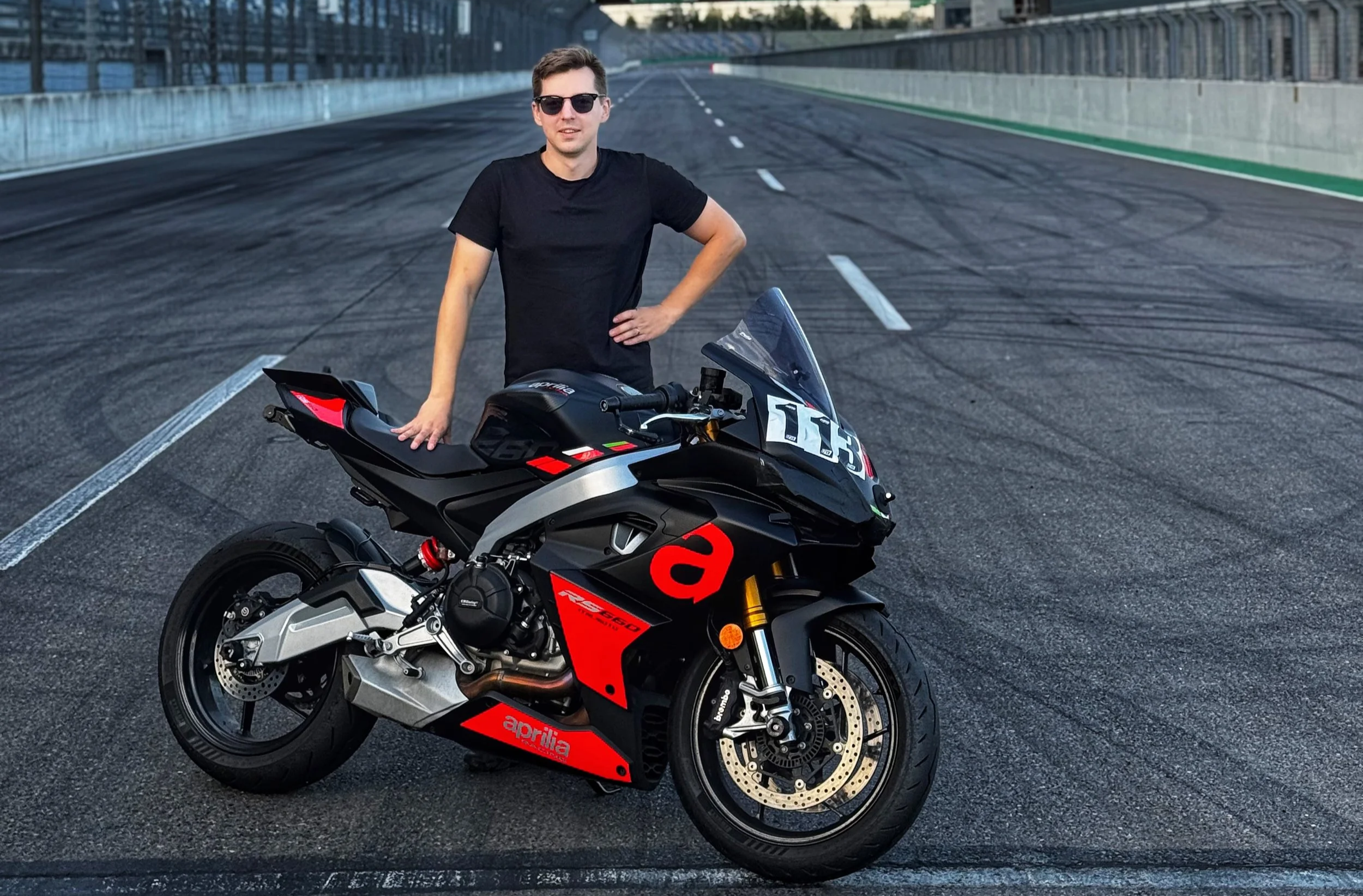
Lausitzring is a track of long straights, so I set myself one focus: get confident braking from high speed, and get the exits onto the straights right, because every km/h there carries all the way to the next braking point. The data shows it worked in two places: the braking zone at the end of the second long straight and the last corner onto the main straight gave 3 of the 4.4 seconds I found between Saturday and Sunday. It also shows where I still didn’t: the first corner after the start/finish line, the hardest stop on the track at about 200 km/h, is still where I leave the most time.
Summary
Goals for the weekend
Before day one, I ran my lap-time simulator for the RS660 at Lausitzring. It showed that corner speed matters most here: per 10% improvement, it’s worth about 4× more (2.5 s) than braking and acceleration (0.6 s). I still chose braking and acceleration as my focus. A fast track with long straights is the best place to practice hard braking from high speed, and that’s the skill I wanted to master.
Brake later and harder at the end of the straights: commit to higher braking G from 190–200 km/h instead of a long, gentle stop.
Get the exits onto the straights right: carry more speed through the last corner before each straight, because every km/h there lasts until the next braking point.
Full throttle earlier and longer: pick the bike up and open the throttle sooner, and don’t roll off on the straights.
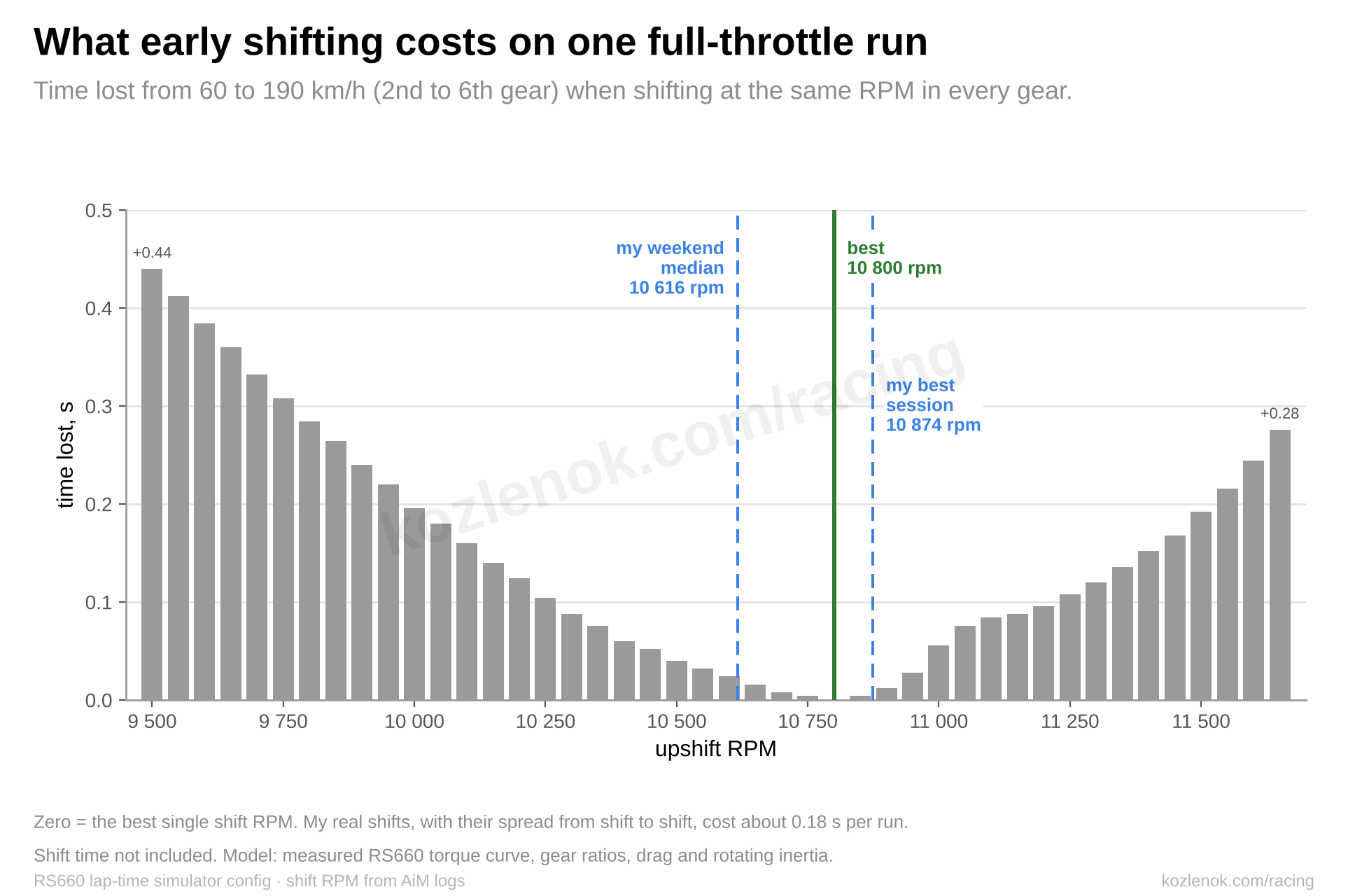
Shift at the right RPM: upshift close to the best point (about 10 800 rpm) every time, instead of shifting early.
Leave corner speed and lean angle as they are: don’t chase lean angle (can be trained at home track).
Day One
Sunny, +25C to +27C, minimal wind.
In the first two sessions, I followed the instructor (S1000RR).
I got familiar with the track and set some of the braking markers. In the second session, we settled on a sightseeing pace of 2 minutes and 25 seconds per lap.
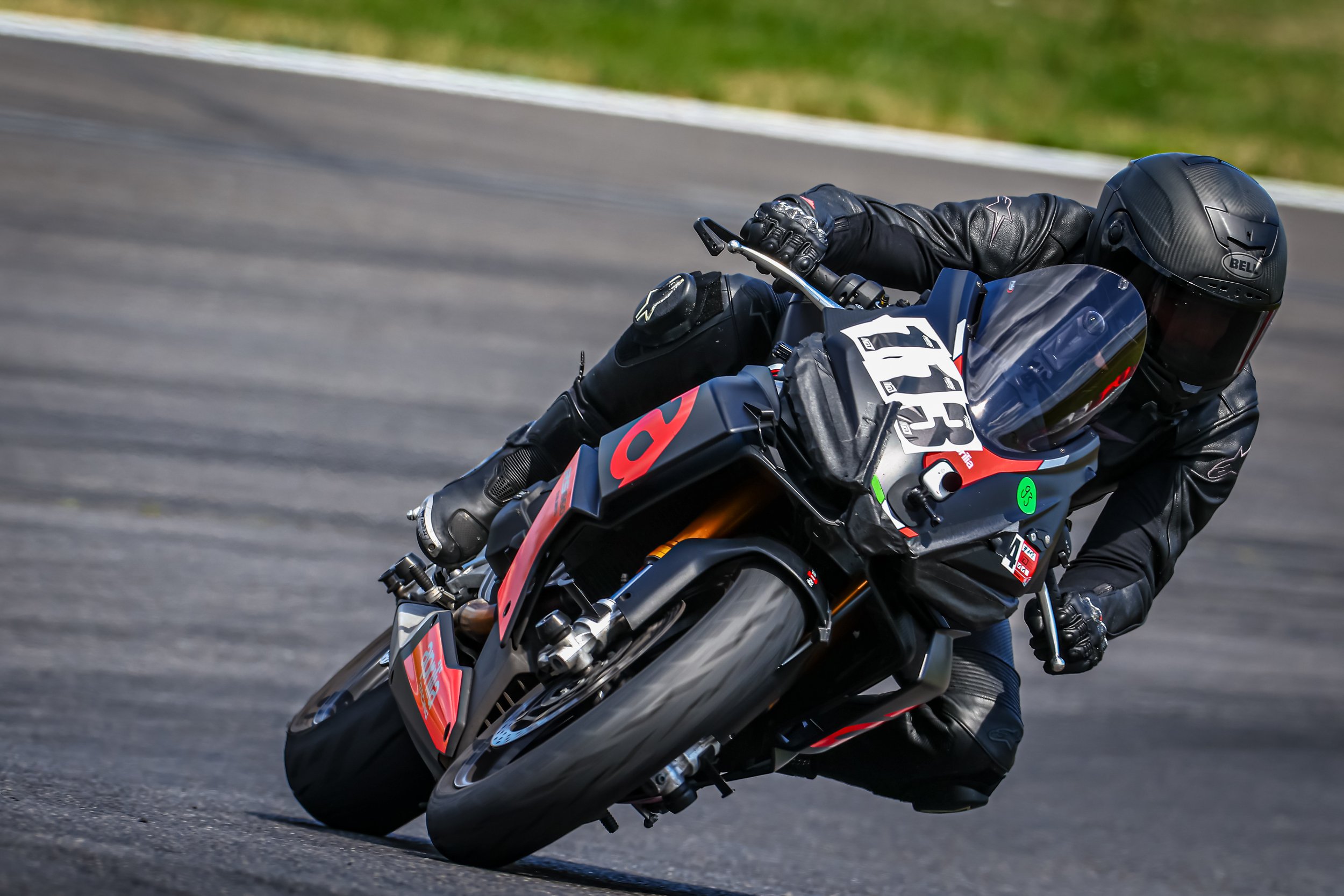
In my first solo session, I backed off by about three seconds because I had no pacer and no solid reference points. However, toward the end of the day, I found a comfortable line and made a 2 minutes and 20.8 seconds lap. In the last session, I finally realized I could use braking points without being distracted by the speed on my dash. Technically, I held full throttle through the whole straight, then braked hard and never ran out into the first corner's safety zone.
After the first day at the new track, I improved the following:
Braking confidence grew through the day: average peak braking per corner went from 0.51 G to 0.65 G (catastrophically low even for me)
Corner speed improved too: average slowest-corner speed rose from 65.5 to 68.6 km/h, showing I was getting more comfortable with my line
Consistency: the last session was the most consistent: lap times varied least (standard deviation 2.6 s against 4.6–6.5 s earlier).
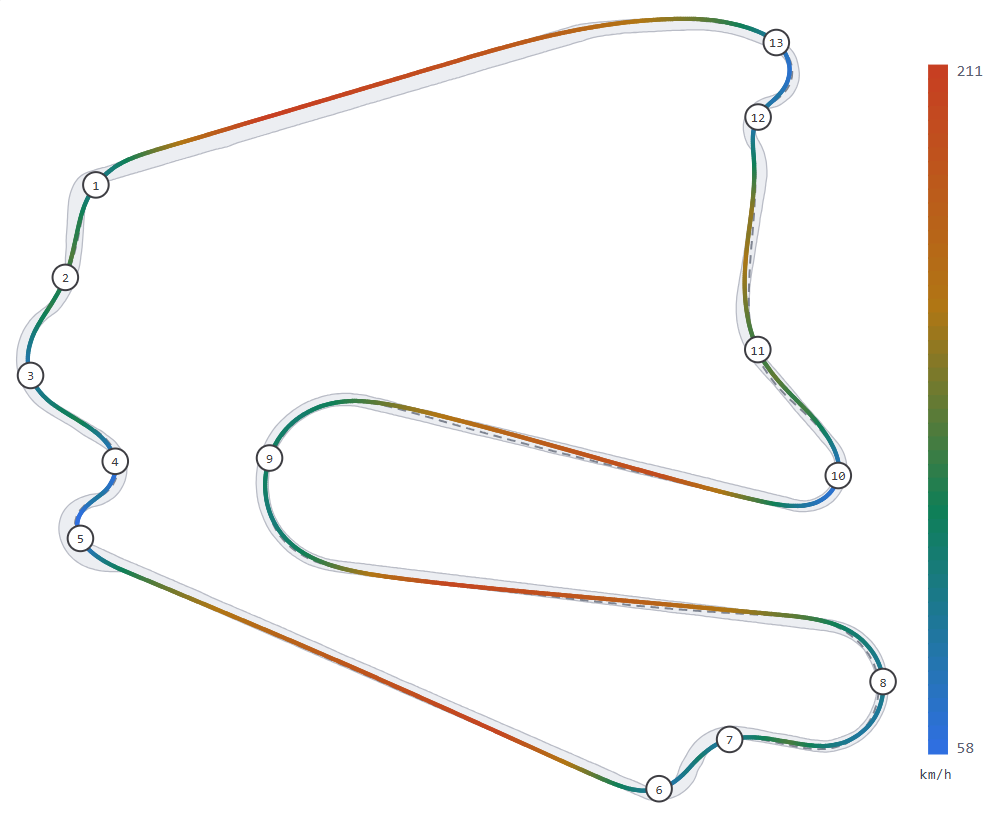
I knew I could get at least 2-3 seconds faster on the second day without increasing the risk, so I uploaded my line to the simulator to see what it suggested. For a low-risk lap time target, I set a 1G cornering limit (45-degree lean angle) and a 0.8G deceleration limit (still on two wheels). As a result, I have a suggested racing line and a time reference of 1 minute and 58.8 seconds (the simulation converged after about 1000 laps). I knew I didn't have the consistency to perform at my best every fraction of a lap to achieve this lap time, but the suggested behavior on the straights was useful.
Day Two
Sunny, +25C to +29C, minimal wind.
I decided to take a slow first session to refresh my memory, knowing I couldn’t heat the tires in the cold morning. In the second session, I reviewed my mistakes from Saturday and set a better lap of
2 minutes and 18.7 seconds (-2.1 s). In this session, I made my best braking of the weekend, achieving below -1.2 G (-1.37 G short spike). On an RS660 with a shortened wheelbase and limited skill to lean the bike before braking, I lifted the rear wheel, and the electronics kept it as low as possible.
My third session was the best weekend session, where I set my personal best of 2 minutes and 16.4 seconds, which is 4.4 s faster than my best lap on Saturday.
Analysis showed that most of the improvement came from:
The braking zone at the end of the second long straight: I arrived 10 km/h faster and braked at 0.80 G instead of 0.53 G.
The last corner onto the main straight: I carried 15 km/h more in, and the extra speed lasts all the way down the straight.
Full throttle: 30.6 s per lap, more than any other lap of the weekend.
Shifting: median 10 874 rpm, almost exactly the best point.
I knew I could get at least 2-3 seconds faster on the second day without increasing the risk, so I uploaded my line to the simulator to see what it suggested. For a low-risk lap time target, I set a 1G cornering limit (45-degree lean angle) and a 0.8G deceleration limit (still on two wheels). As a result, I have a suggested racing line and a time reference of 1 minute and 58.8 seconds (the simulation converged after about 1000 laps). I knew I didn't have the consistency to perform at my best every fraction of a lap to achieve this lap time, but the suggested behavior on the straights was useful.
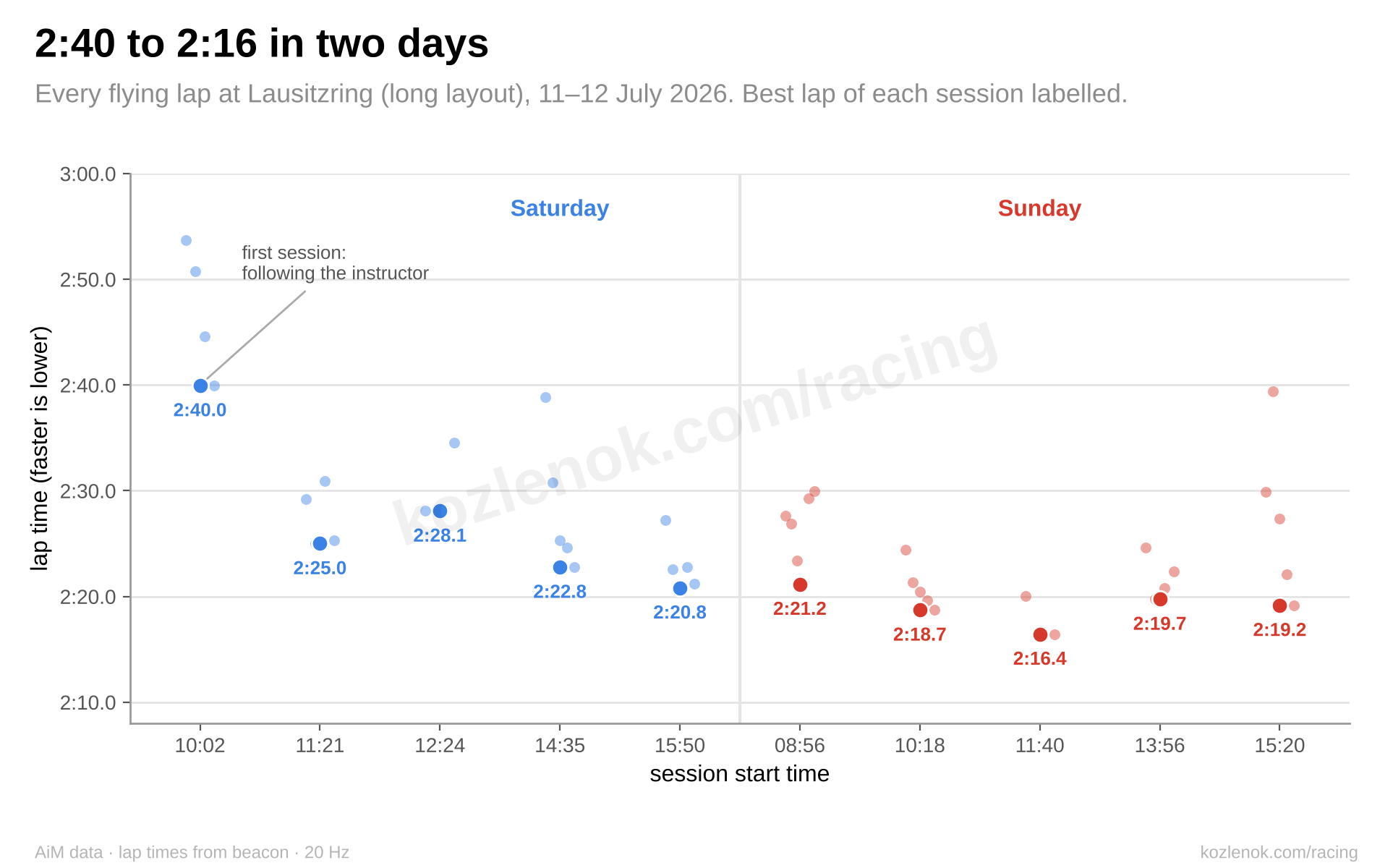
Sunday afternoon, I already felt tired and decided to ride two more sessions without goals. To enjoy the track and scrub the tires (to clean off the rubber they picked up). Surprisingly, without pushing hard, I still managed to drive faster than on the first day.
Tech Summary
This chapter offers a glimpse into the data analysis and highlights some practices I use to set up and drive decisions. Data acquisition setup for my Aprilia RS660 is described on another page.
Suspension
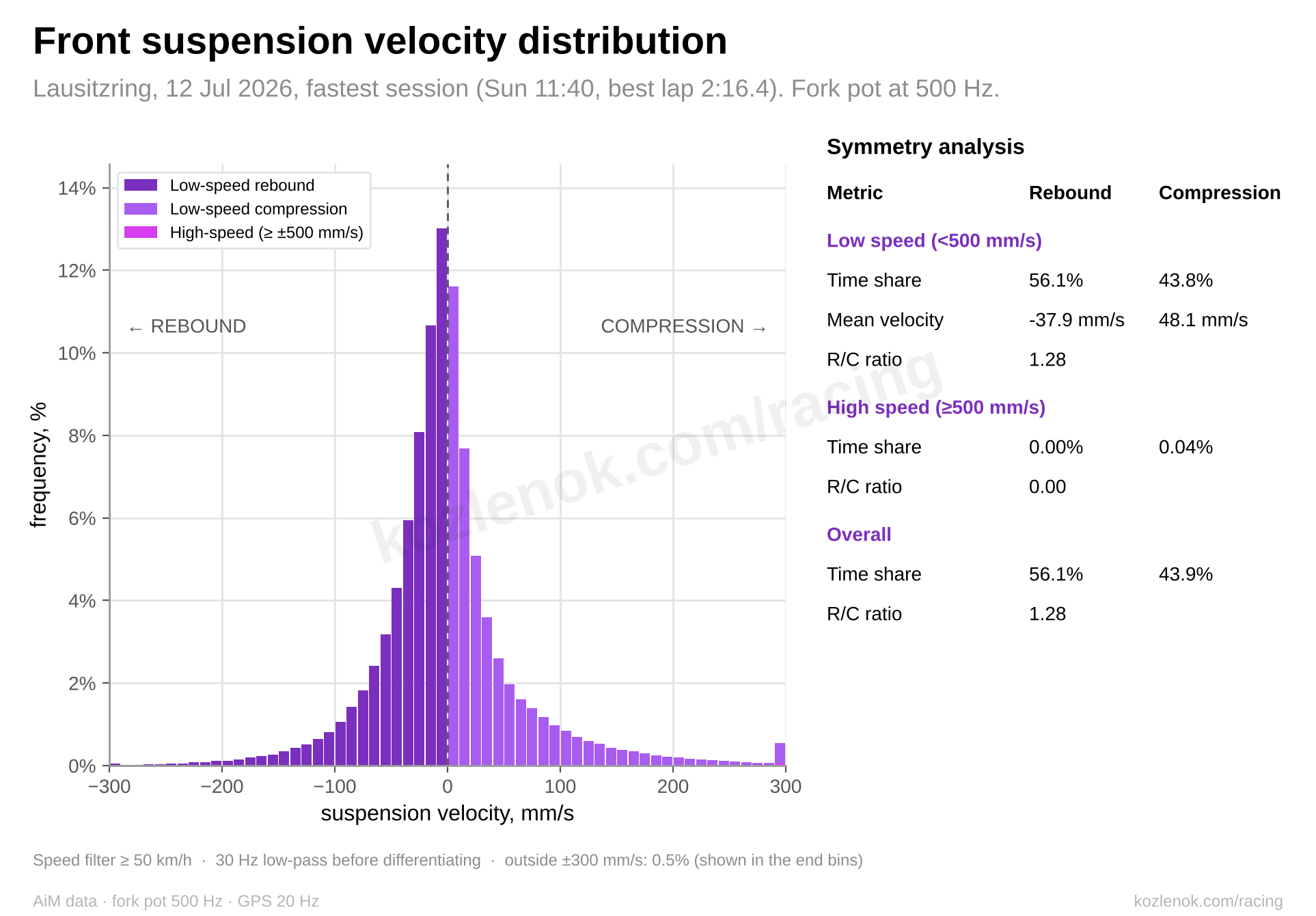
The fork spends more time extending than compressing: 56% rebound against 44% compression, a ratio of 1.28. That’s almost the same as at Oschersleben (1.25), so the fork’s balance doesn’t change with the track. That’s on purpose: I run the rebound damping on the tighter side. As an amateur rider, I find that more confidence-inspiring than a fork that springs back quickly (which is always a way to get faster).
What changed is speed: the fork moves about 30% faster in both directions than at Oschersleben, which suits harder braking from higher speeds on Lausitzring’s long straights. Almost nothing happens above 500 mm/s (0.04% of the time). The surface here is very smooth, so the fork does almost all its work in the low-speed range.
G-G Diagram
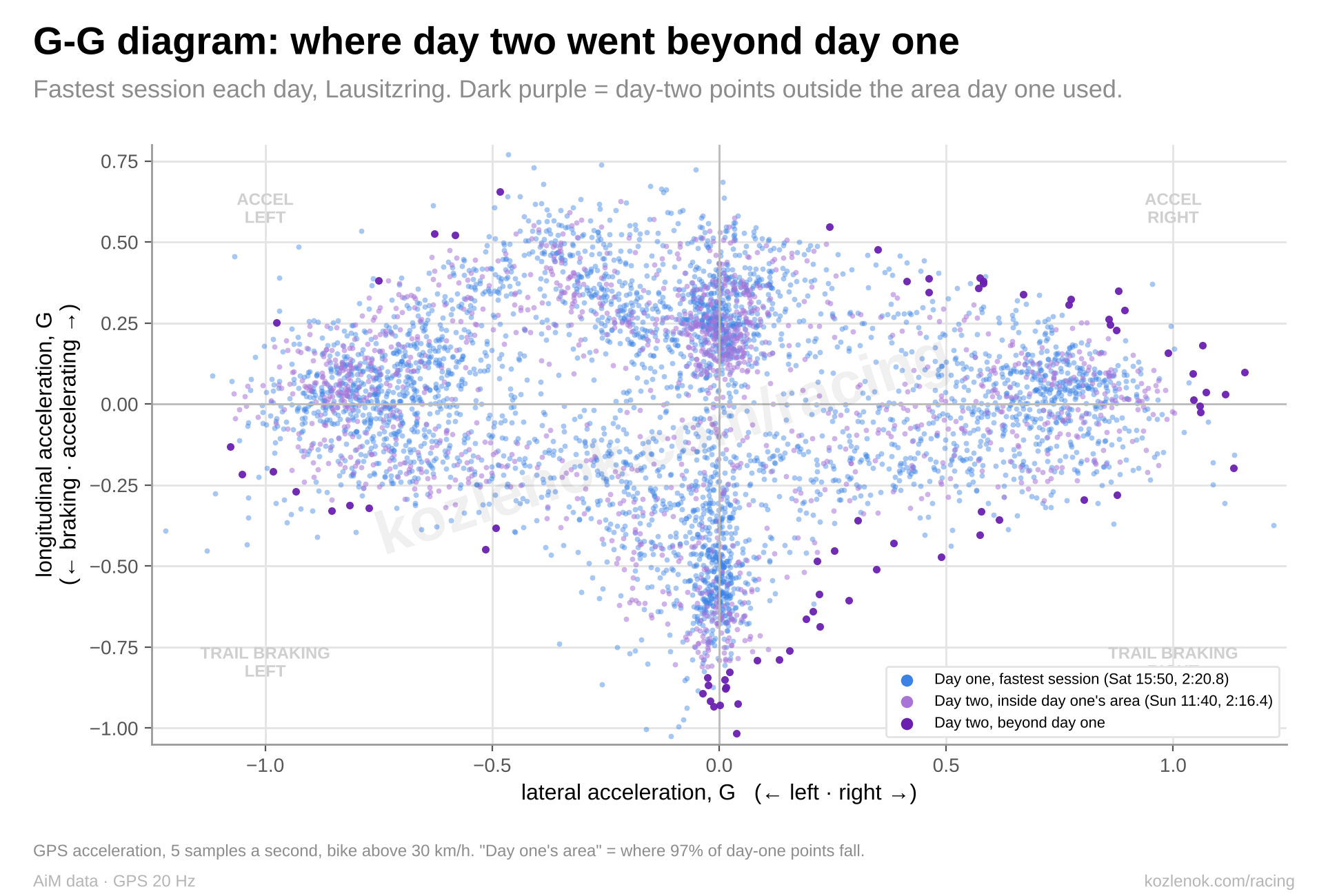
The G-G plot is a versatile tool that shows the rider's symmetry between left and right corners, their acceleration and deceleration capabilities, and their performance at corner exit and during trail braking.
As the diagram below shows, my best lap on day two was 4.4 s faster than on day one. Most of the two sessions overlap; only about 5% of the day-two points (dark purple) fall outside the area I used on day one.
What I noticed during the analysis:
On day two, my typical hard braking went up from about 0.73 G to about 0.85 G (the hardest stop of the weekend is described above);
On day two, I carried more brake into the right corners, the line of dark purple points between braking and the right side of the plot;
On day two, I found more grip and drive in the right corners: up to about 1.1 G of lateral acceleration, and more acceleration while still leaning;
On both days, the left side of the plot looks almost the same, so I’ll look there next for time.
Tire behaviour
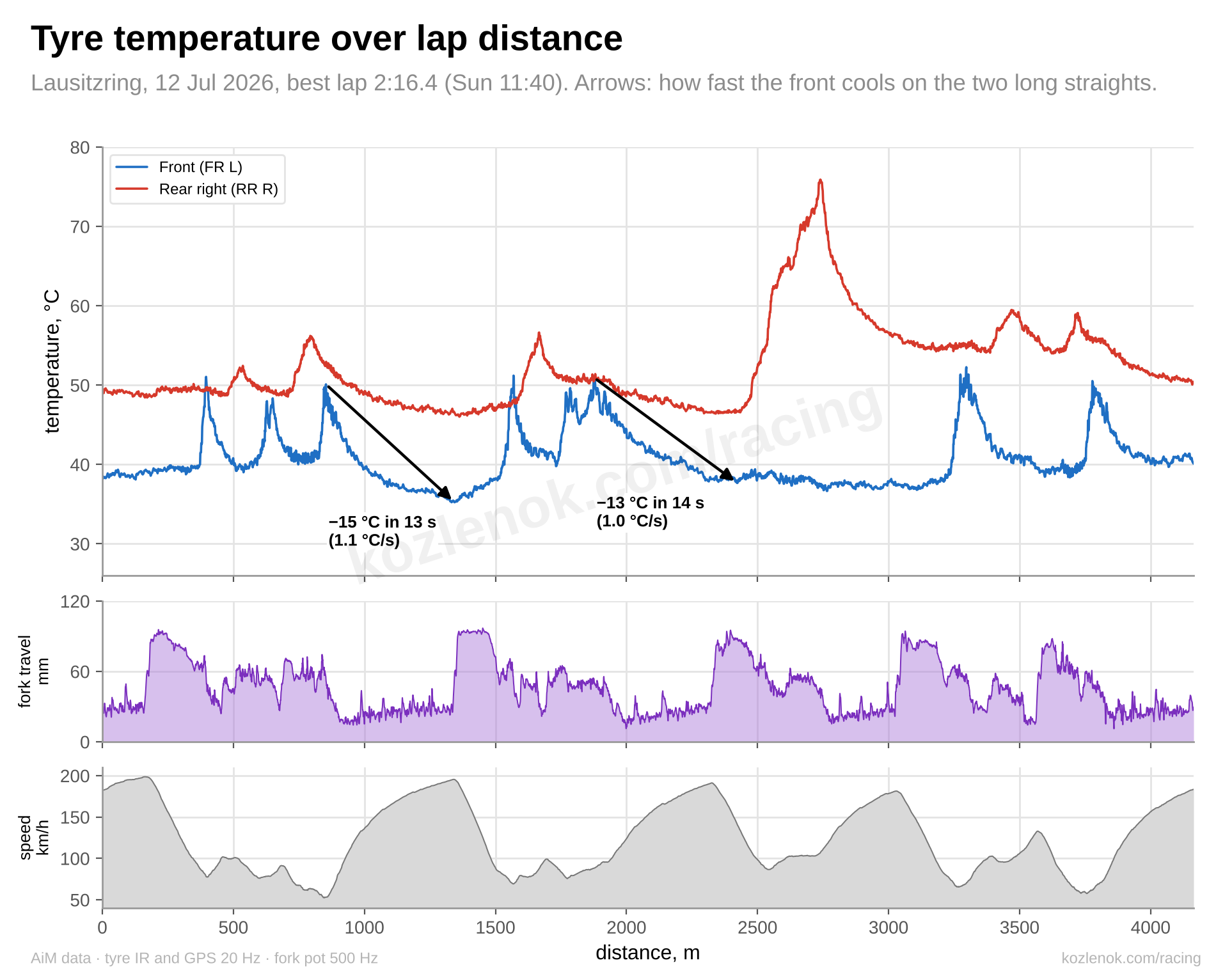
The front cools down on every long straight. On my best lap, the front tire surface lost 15 °C in 13 s on the first long straight and 13 °C in 14 s on the second, about 1 °C per second. The rear lost only about 7 °C. Lausitzring’s long straights kept the front cooling, so on average it ran about 7 °C colder than at Spreewaldring, while the rear stayed the same.
Warm-up per session. In every session, the front needed 3–4 laps to reach about 40 °C, and the first flying lap was always the slowest. Sunday morning is the clearest case: air 23 °C, front never above 39 °C, best lap 2:21.2, slower than Saturday’s last session.
The rear tire’s left/right difference matches my confidence in right corners. On Saturday, the two rear sensors read the same. On Sunday, the right side ran 2–3 °C hotter than the left in every session, peaking at about 75 °C. That fits the G-G finding that I braked, cornered, and drove harder in right-hand corners on day two.
Next track day goals
Motorcycle setup
Move the shift lever due to many missed shifts to a higher gear;
Pitch the chassis forward to compress the front suspension at least 110mm.
Piloting
Revise the body position before hard braking;
Control the arm and elbow position at lean;
Apply the throttle more aggressively at TC level 4 (to challenge the TC within a safe level);
Set more ambitious braking markers.